BNPL vs. Lease-to-Own: How They Compare and When to Use Each
BNPL splits a purchase into interest-free payments and you own it at checkout; lease-to-own is a lease you can end anytime, chosen for flexibility, with the option to own. The core split is what each product is.
By VRTO (Virtual Rent To Own), the rent-to-own directory. Last updated: 2026-07-01.
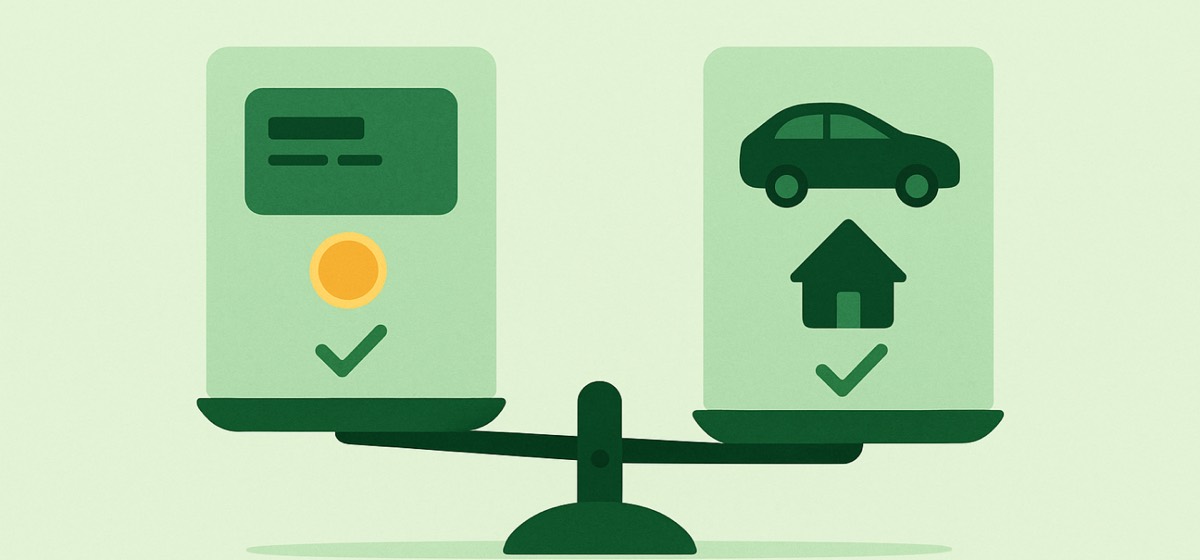
Buy-now-pay-later (BNPL) and lease-to-own solve different problems. BNPL splits a purchase into a few interest-free payments and you own it at checkout. Lease-to-own is a lease you can end anytime: you get the item now, pay as you go, and can own it after a set number of payments or return it whenever you want and owe nothing further. People choose lease-to-own for that flexibility, not as a fallback. The products also qualify you differently: BNPL runs on your credit or a soft credit read, while lease-to-own runs on income and a bank account rather than a credit score, so no credit check is required. That difference in how each works drives almost everything else below.
There is a third term that gets folded into BNPL by mistake, and clearing it up first keeps the rest of this page straight. The Rent-to-Own Revolution (APRO), the industry's own published history, draws the line precisely: virtual lease-to-own providers at the point of sale, "such as Progressive Leasing, Acima, and Snap Finance," are "lease-to-own models delivered virtually," and "these platforms are not 'Buy Now, Pay Later' (BNPL)." So there are three products here, not two:
- BNPL (Klarna, Afterpay, Affirm) is, in the book's words, "a separate category entirely." It splits purchases into short, interest-free installments, often four payments over six weeks, and is regulated as credit. You own the item at checkout.
- Virtual lease-to-own (Progressive Leasing, Acima, Snap Finance) embeds a lease-purchase option into a retailer's checkout. The book describes these as "cancellable leases with purchase options processed in minutes," and states plainly that "they are neither BNPL nor credit-card installments." You lease first, with an option to own.
- Virtual rent-to-own (VRTO) is a rent-to-own agreement completed fully online with a rental dealer, "a rental first with an option to purchase," start to finish on your phone.
This page compares the first two, because those are the two options a shopper actually sees side by side at checkout. Klarna, Afterpay, and Affirm are BNPL providers. Snap Finance, Acima, and Koalafi are lease-to-own providers. A store that offers "Klarna or lease-to-own" is offering two different products to two different shoppers.
The comparison at a glance
| Dimension | BNPL (Klarna, Afterpay, Affirm) | Lease-to-own / RTO (a local RTO store, or virtual providers like Snap, Acima, Koalafi) |
|---|---|---|
| What it is | Buy now, pay over time | Lease with an option to own |
| You own the item... | Immediately at checkout | At lease-end or early buyout |
| Approval basis | Credit / soft credit check | Income + bank account · no min. credit score |
| Typical cost above sticker | Pay-in-4 interest-free · longer Affirm plans charge APR | Full total disclosed up front · lower it by buying out early or returning |
| Payment schedule | 4 payments / 6 weeks · or monthly | Weekly/biweekly/monthly · 12–24 months |
| Miss a payment | Late fee &/or interest · may hit credit | Cancel lease · return item · stop paying |
| Early exit | Pay remaining balance | Return anytime · or early-buyout price |
| Best for | Spreading a purchase you own at checkout | Flexibility: get it now, return anytime, own if you decide |
How BNPL works
BNPL lets you take the item home today and pay for it in installments. The most common form is "pay in 4": four equal payments over about six weeks, with no interest if you pay on time. Klarna and Afterpay both build their checkout products around this pay-in-4 model. Affirm offers pay-in-4 plus longer monthly plans that can run several months to a few years and charge an annual percentage rate (APR) disclosed at checkout.
With BNPL you own the item at the moment of purchase. The provider pays the merchant, and you repay the provider. Approval is fast and often uses a soft credit check that does not affect your score, but it is still a credit decision. The provider is extending you credit to buy something. Klarna and Affirm both report certain longer-term loans to credit bureaus, which means the plan can affect your credit either way.
The cost is low if you pay on time. Pay-in-4 plans are structured to be interest-free. Longer Affirm plans charge interest, so the total you pay depends on the APR and term shown before you confirm. Late payments trigger fees, and for reported plans, a missed payment can lower your credit score.
How lease-to-own works
Lease-to-own is a lease, not a loan. You do not buy the item. You rent it, make scheduled payments, and gain the option to own it after you complete the term. You can get it two ways: from a local rent-to-own store, or through a virtual provider at a national retailer's checkout (Snap Finance, Acima, and Koalafi each fund the purchase at the store, then lease the item to you). For most people the local store is the better route. It delivers and sets up the item, services and repairs it while you pay it off, and takes it back in person if you decide to return it. The virtual providers are a finance layer at checkout and do not service the product. You can find a local rent-to-own store near you on VRTO.
That in-person return path is a real advantage. With the virtual providers, physically returning an item almost never happens in practice: a New York City investigation found 2 returns out of 39,000 leases, and the CFPB counted 165 out of 1.7 million Snap leases. The right to return is genuine either way, but a store you can walk back into makes it usable.
How you qualify is a real difference. Lease-to-own providers do not require a minimum credit score; they verify income and an active checking account instead. No credit check is an access point, not a verdict on who you are: anyone with steady income and a bank account can use lease-to-own, whether or not they also hold credit cards. It opens the door to the flexibility of a terminable lease without pulling your credit.
The cost is transparent and you control it. Because it is a lease with an ownership option, the total of all payments is higher than the cash price if you take the lease to full term, and that full total is disclosed to you before you sign. The full-term figure depends on the provider. Katapult states in its SEC filings that renewing to the maximum term costs "approximately two times the cash price," and the FTC's 2020 action against Progressive Leasing found consumers frequently paid approximately twice the sticker price if they paid to term. Snap and Koalafi do not publish a total; it is set in your individual agreement. Those are full-term figures, disclosed up front, not surprises.
And you lower that total whenever you choose. First, you can return the item at any time and owe nothing further. That is the "terminable" part of the lease, the option BNPL does not have. Second, most providers publish an early-buyout price (often called a "90-day" or "same-as-cash" window) that is far cheaper than paying the lease to term. Buy out early and lease-to-own costs much closer to retail. The full total and the early-buyout price are both disclosed before you sign, so what you ultimately pay is your call.
Approval requirements: the key difference
This is the dimension most shoppers are actually comparing, so here it is directly:
- BNPL runs a credit decision. Klarna, Afterpay, and Affirm approve you based on your credit profile, usually via a soft check that does not hurt your score. If your credit is thin or damaged, you may be declined or given a lower limit.
- Lease-to-own runs an income decision. Snap, Acima, and Koalafi approve based on steady income and an active bank account, with no minimum credit score. No credit check means the model is open to more people, and it never touches your credit report.
If you qualify for BNPL and will pay on time, BNPL is the lower-cost path, because pay-in-4 is interest-free. If you want a terminable lease without a credit check, lease-to-own gives you that flexibility: get the item now, return it anytime, own it if you decide. You see the full total before you sign and control it by buying out early or returning.
Total cost: what you actually pay
BNPL pay-in-4, paid on time, costs the sticker price and nothing more. Longer Affirm plans add the disclosed APR, so a $600 purchase on a 12-month plan costs the $600 plus interest at the rate shown at checkout.
Lease-to-own discloses its full total up front, and you control where you land inside it. The full-term total depends on the provider. Katapult's SEC filings put it at about two times the cash price, so a $600 item taken to lease-end runs roughly $1,200 to own; its 90-day price is the cash price plus 5%. Progressive and Acima cost more than cash price to term and near cash price if bought out early. Snap and Koalafi do not publish a total, so ask for it in writing. Paying the early-buyout price inside the provider's window cuts the cost sharply, and returning the item stops the payments entirely. The two numbers you get before you sign are the total of all payments and the early-buyout price. Both are required to be disclosed to you, so you can decide up front what you want to pay.
What happens if you miss a payment
The consequences split cleanly.
BNPL: A missed payment triggers a late fee, and on interest-bearing plans, added interest. On plans that report to credit bureaus, a missed payment can lower your credit score. You still owe the balance because you already own the item.
Lease-to-own: Because it is a lease you can terminate, a missed payment does not create a debt you are stuck with. You can return the item and stop paying. Providers may charge late fees on missed lease payments, but the defining feature is that you can end the lease by giving the item back. There is no loan balance chasing you afterward.
When each one makes sense
Use BNPL when you qualify for it, you want to spread out a purchase, and you will pay on time. Pay-in-4 is interest-free and you own the item immediately. It is the lower-cost option when you own the item at checkout.
Use lease-to-own when you want the flexibility of a terminable lease for furniture, appliances, tires, or electronics: get the item now, keep it as long as you like, return it anytime, own it if you decide. Qualifying is based on income, with no credit check. Use the early-buyout window if you want to pay the least, since the full-term total is the top of the range. When you go this route, a local rent-to-own store is usually the better choice than a virtual provider: it delivers, sets up, and services the item, and you can return it in person. Reach for a virtual provider when no local store carries what you need or you are checking out at a national retailer online.
Before either one, get the numbers in writing: for BNPL, the term and any APR; for lease-to-own, the total of all payments and the early-buyout price. If you are leasing to own, find and compare a local rent-to-own store near you on VRTO before you sign.
FAQ
Is Klarna lease-to-own? No. Klarna is a buy-now-pay-later provider. You own the item at checkout and repay Klarna in installments, most commonly four interest-free payments over about six weeks. Lease-to-own providers like Snap, Acima, and Koalafi lease you the item first, with an option to own it after you complete the term.
What is the difference between BNPL and lease-to-own approval? BNPL qualifying is a credit decision: Klarna, Afterpay, and Affirm check your credit, usually with a soft pull. Lease-to-own qualifying is an income decision: Snap, Acima, and Koalafi verify income and an active bank account with no minimum credit score. Because lease-to-own uses income and a bank account instead of a credit check, it is open to more people.
Which costs more, BNPL or lease-to-own? Taken to full term, lease-to-own's total is higher, and it is disclosed to you before you sign. BNPL pay-in-4 is interest-free when paid on time, so it costs the sticker price. Katapult's SEC filings put its full-term cost at about two times the cash price, and Snap and Koalafi disclose their total only in your agreement. Either way you control the number: buy out early to pay much closer to cash price, or return the item anytime and stop paying.
Do I need good credit for lease-to-own? No. Lease-to-own providers do not require a minimum credit score. They qualify you on steady income and an active checking account, with no credit check, so the model is open to anyone who wants the flexibility of a terminable lease.
What happens if I stop paying a lease-to-own agreement? You return the item and stop paying. Lease-to-own is a terminable lease, so ending it does not leave you with a loan balance. Providers may charge late fees on missed payments, but you can end the lease by giving the item back.
Does BNPL affect my credit score? It can. Klarna and Affirm report certain longer-term plans to credit bureaus, so on-time payments can help and missed payments can hurt. Many pay-in-4 plans use only a soft check that does not affect your score, but check the terms for the specific plan before you confirm.
Sources
- The Rent-to-Own Revolution: A Definitive History of Advocacy and Consumer Access (Association of Progressive Rental Organizations, 2025): the BNPL vs. virtual lease-to-own vs. VRTO distinction; virtual lease-to-own providers "are not 'Buy Now, Pay Later' (BNPL); they are lease-to-own models delivered virtually," and "are cancellable leases with purchase options... neither BNPL nor credit-card installments."
- Katapult Holdings Form 10-K (SEC EDGAR, FY2024): a customer who renews to the maximum term pays "approximately two times the cash price"; the 90-day early-purchase price is the "cash price of the item plus 5%."
- FTC, 2020 Progressive Leasing action: consumers "frequently paid approximately twice the sticker price" if they paid to term.
- Provider public terms: Klarna, Afterpay, Affirm (BNPL / pay-in-4 and longer plans); Snap Finance, Acima, Koalafi (lease-to-own, income-based approval, early-buyout options). Snap and Koalafi do not publish a total-cost figure; it is disclosed in the individual agreement. Cited at the category and public-model level; specific plan terms vary and are disclosed at checkout.
About this guide. VRTO (Virtual Rent To Own) is a rent-to-own store directory. We are not a lender, dealer, retailer, attorney, or financial advisor, and we take no part in any lease. This guide is general information to help you shop and compare, not legal, financial, or tax advice. Rent-to-own programs, fees, credit-reporting practices, and consumer protections vary by company and by state and change over time. Always read your own agreement and confirm the current terms and your rights with the store and, where it matters, a qualified professional in your state before you sign.
Plus updates if the rules change. Never shared with stores. Unsubscribe anytime.
See the totals for your item
Compare weekly price, full total, and early payoff across rent-to-own stores near you.