Personal Loans vs Store Financing vs Lease-to-Own: How to Pay for a Major Purchase
For a major purchase you can't pay cash for, your three options are a personal loan, store financing, or lease-to-own. Each is a legitimate choice; they differ most in what you commit to and how much flexibility you keep.
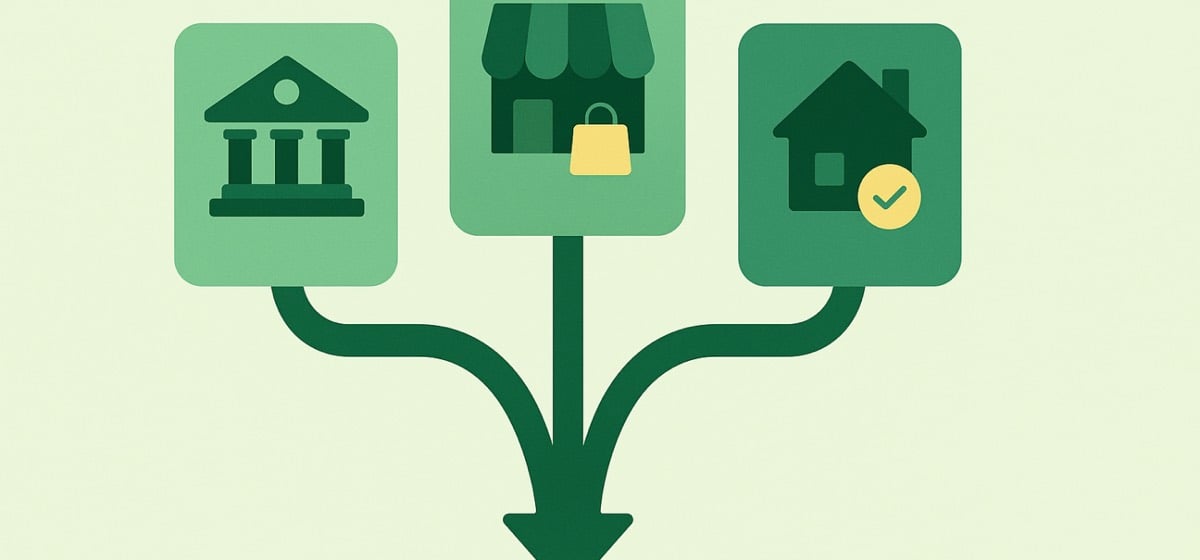
For a major purchase you can't or don't want to pay cash for, like an appliance, furniture, or a laptop, your three main options are a personal loan, store financing, or lease-to-own. Each is a legitimate way to pay; they differ most in what you commit to. A personal loan needs the best credit and puts you in fixed debt you owe until it's paid off. Store financing sits in the middle, usually as revolving credit with a promo window. Lease-to-own is a lease, not credit: no credit check, no debt, and you can return the item anytime and owe nothing further, or own it if you decide to. This guide lays out what each asks of you, what each costs, and which fits your situation.
Here's the full comparison.
- Last updated: 2026-07-01
- Author: VRTO (Virtual Rent To Own), the rent-to-own store directory. We explain how rent-to-own works and how it stacks up against other ways to pay.
The comparison at a glance
| Option | Credit needed | What it costs | Flexibility | Best for |
|---|---|---|---|---|
| Personal loan | Good to fair · mid-600s+ for best rates | Fixed APR interest · total depends on rate & term | Own outright · fixed payment · default hits credit / collections | Decent credit · lowest total cost |
| Store financing | Fair to good · some "no credit needed" tiers | Often 0% in promo window · deferred interest if you miss payoff | One store's card / plan · usually revolving | Fair-to-good credit · pays off inside promo |
| Lease-to-own (rent-to-own) best at a local RTO store | None · no credit check | Full total of payments disclosed up front · lower it by buying out early or returning anytime | Rent → own at term or early buyout · return in person anytime, owe nothing further | Want the item now · value flexibility and no debt · want in-person service and returns from a local store |
Personal loan (or "major purchase loan")
A personal loan gives you a lump sum you repay in fixed monthly payments at a set interest rate. You buy the item outright and own it from day one.
- Credit needed: the most of the three. Lenders reserve their lowest APRs for good credit and offer higher rates, or a denial, to fair and poor credit.
- Cost: you pay the price plus interest. A lower APR and shorter term mean less total interest. This is usually the cheapest of the three options for someone who qualifies.
- Approval odds: the hardest to get with weak credit. Many lenders run a hard credit check and can decline you.
- If you can't pay: you still owe the balance. Missed payments are reported to the credit bureaus, can trigger late fees, and the debt can be sent to collections. You keep the item, but the debt follows you.
- When it makes sense: you have good-to-fair credit and want the lowest total cost, and you're comfortable owing a fixed debt.
Store financing
Store financing is credit offered at the point of sale, usually a store card or an installment plan, often advertised as "0% for 12 months" or "no interest if paid in full."
- Credit needed: varies. Some store cards want fair-to-good credit; some plans market "no credit needed" tiers that route you to a third-party lease provider (see below).
- Cost: genuinely cheap if you pay the balance inside the promo window. The trap is deferred interest: with many "0% if paid in full" offers, missing the payoff date charges interest back to the original purchase date, not from the date you fell behind. Read whether the offer is "deferred interest" or true "0% APR." They are not the same.
- Approval odds: better than a personal loan for many buyers, especially the "no credit needed" tiers, which are frequently lease-to-own products in disguise.
- If you can't pay: you owe the balance plus any deferred interest, and it's reported to the credit bureaus like any credit card.
- When it makes sense: you have fair-to-good credit and a realistic plan to pay off the balance before the promo period ends.
Lease-to-own (rent-to-own)
Lease-to-own lets you take the item home and pay it off over time, weekly, biweekly, or monthly, with no credit check. You don't own it until you finish the payments or exercise an early buyout. You can return it anytime with no further obligation.
For most people the best way to do it is through a local rent-to-own store rather than a virtual provider at a national checkout. A local store leases you the item and stands behind it: many include delivery and setup, service and repairs while you pay it off, and an in-person return if you decide to give it back. That return path is a real edge, because with the virtual providers physically returning an item almost never happens in practice (a New York City investigation found 2 returns out of 39,000 leases; the CFPB counted 165 out of 1.7 million Snap leases). Find a local rent-to-own store near you on VRTO, and use a virtual provider when no local store carries what you need.
- Credit needed: none. This is the defining feature. Virtual providers like Acima, Snap Finance, Koalafi, and Progressive Leasing, along with large traditional RTO chains, approve on income and history rather than a credit score, so a thin or damaged credit file is no barrier.
- Cost: fully disclosed before you sign. Rental-purchase statutes require the cash price, the total of payments, and the early-purchase price to be shown up front, so you see the whole number and decide what you actually pay. What you pay to own depends on the provider. Katapult states in its SEC filings that renewing to the maximum term costs about two times the cash price, with a 90-day early-purchase price of cash price plus 5%. The FTC's 2020 action against Progressive Leasing found consumers who paid to term frequently paid approximately twice the sticker price. Snap and Koalafi do not publish a total; it is set in your agreement. Two levers are yours: buy out early to pay far less than the full total, or return the item and stop paying, owing nothing further.
- Approval odds: the highest. No-credit-check approval is the whole point.
- If you can't pay: you return the item and walk away. Because it's a lease, not a loan, you generally don't owe a remaining balance and there's no repossession lawsuit or collections in the way a loan default works. You lose what you've already paid, but the exposure stops.
- When it makes sense: you want the item now, you value the flexibility to return it and stop paying if your situation changes, and you'd rather not take on debt or a credit check. Use the early buyout if you have it: most agreements let you cut the total sharply by paying off early. Verify the store first.
The honest framing: lease-to-own trades a higher total for flexibility and no debt, and that trade is yours to make. A loan or store card locks you into a balance you owe until it's paid; a lease keeps the exit open. You get the item now, you can return it and stop paying anytime, and you own it only if you decide to. The full total of payments is disclosed before you sign, and you control it: buy out early to pay less, or return the item and owe nothing further. Know the total-of-payments number and the early-buyout price up front, then choose the arrangement that fits how you want to pay.
How to choose
- Choose a personal loan if you want the lowest total and are comfortable owing a fixed debt. It's usually the cheapest path to owning the item, and it needs the strongest credit.
- Choose store financing if you can clear the balance inside the 0% promo window. Confirm whether it's true 0% or deferred interest before you commit.
- Choose lease-to-own if you want the item now with no debt and the freedom to return it anytime. You see the full total up front and control it: use the early buyout to lower it, or walk away and owe nothing further. When you go this route, start with a local rent-to-own store on VRTO: it delivers, sets up, and services the item and takes it back in person, which a virtual checkout provider does not.
Frequently asked questions
Which is cheapest: a loan, store financing, or lease-to-own? On total dollars, a personal loan is usually lowest if you qualify, because you pay the price plus interest. Store financing can be effectively 0% if you pay inside the promo window. Lease-to-own has a higher total to term (Katapult's SEC filings put it at about two times the cash price; Snap and Koalafi disclose theirs only in your agreement), but you see that number up front and can lower it by buying out early or returning the item anytime. Cheapest on paper isn't always the right fit; weigh the total against the flexibility and the debt each option asks of you.
Which one works without a credit check? Lease-to-own. It requires no credit check and approves on income and history rather than a credit score, so a thin or damaged credit file is no barrier. It's a lease, not credit, which is also why there's no debt and you can return the item anytime.
What happens if I stop paying? It depends on the product. With a loan or store card, you still owe the balance, it's reported to the credit bureaus, and it can go to collections. With lease-to-own, you return the item and walk away with no remaining balance, but you lose what you already paid.
Is store financing really 0% interest? Sometimes, but watch for deferred interest. Many "0% if paid in full" offers charge interest back to the original purchase date if you miss the payoff deadline. A true 0% APR offer does not. Read the terms to know which one you have.
Does lease-to-own build my credit? Not reliably. Some providers report to the bureaus and some don't. Don't choose lease-to-own to build credit; choose it for no-credit-check access. Ask the store whether it reports.
How do I know a rent-to-own store is legitimate? Confirm it's a real, licensed business with a verifiable physical location and get the full total-of-payments figure and early-buyout price in writing before you sign. You can find and compare a local rent-to-own store on VRTO before you commit, which is also the better route than a virtual provider because a local store services the item and takes returns in person.
Sources
- Katapult Holdings Form 10-K (SEC EDGAR, FY2024): renewing to the maximum term costs "approximately two times the cash price"; the 90-day early-purchase price is the "cash price of the item plus 5%."
- FTC (2020): Progressive Leasing action, consumers who paid to term "frequently paid approximately twice the sticker price."
Loan APRs and store-financing terms vary by lender and by borrower; figures here are described as general public ranges, not quotes. Confirm exact rates and terms with the provider before you sign.
About this guide. VRTO (Virtual Rent To Own) is a rent-to-own store directory. We are not a lender, dealer, retailer, attorney, or financial advisor, and we take no part in any lease. This guide is general information to help you shop and compare, not legal, financial, or tax advice. Rent-to-own programs, fees, credit-reporting practices, and consumer protections vary by company and by state and change over time. Always read your own agreement and confirm the current terms and your rights with the store and, where it matters, a qualified professional in your state before you sign.
Plus updates if the rules change. Never shared with stores. Unsubscribe anytime.
See the totals for your item
Compare weekly price, full total, and early payoff across rent-to-own stores near you.