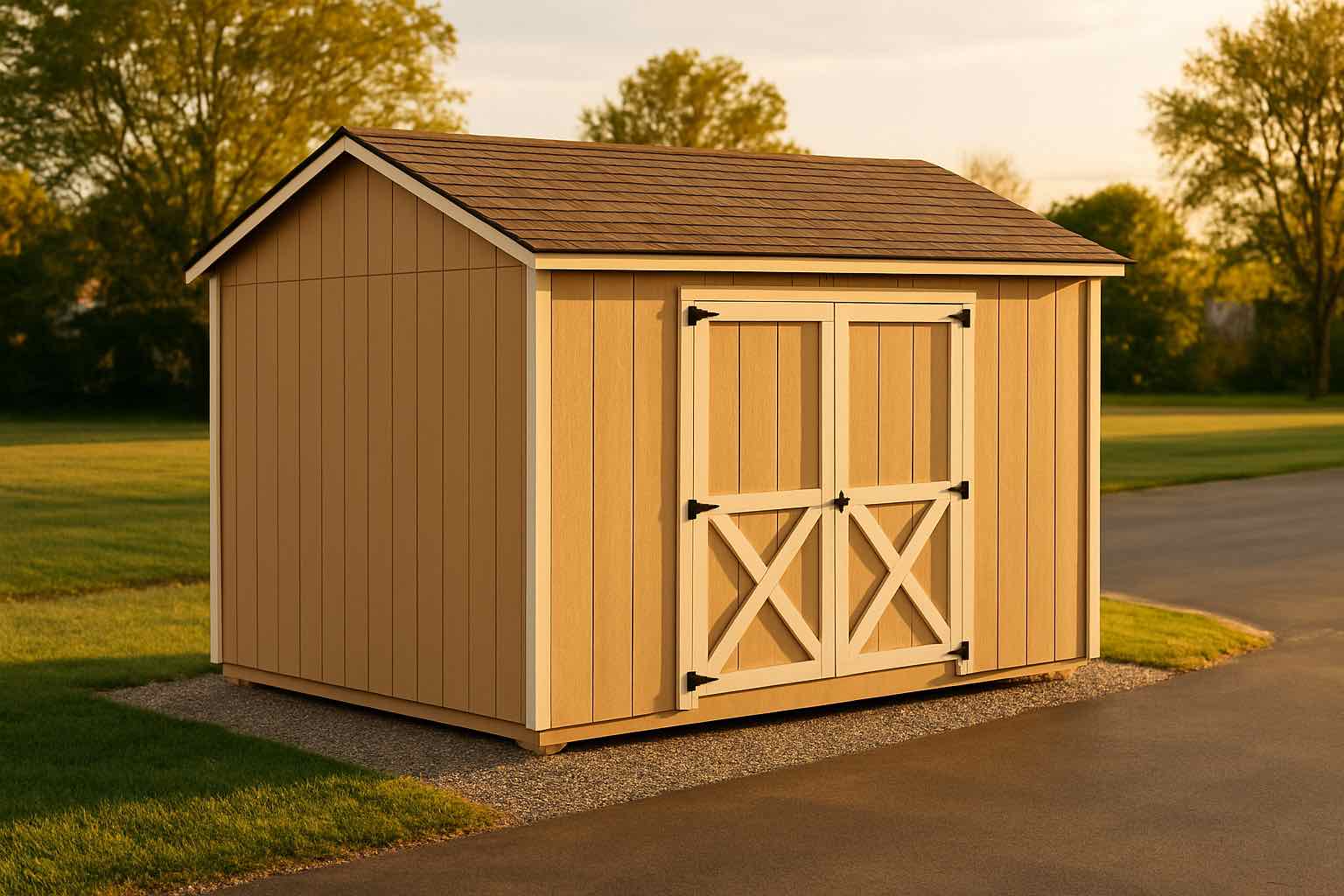
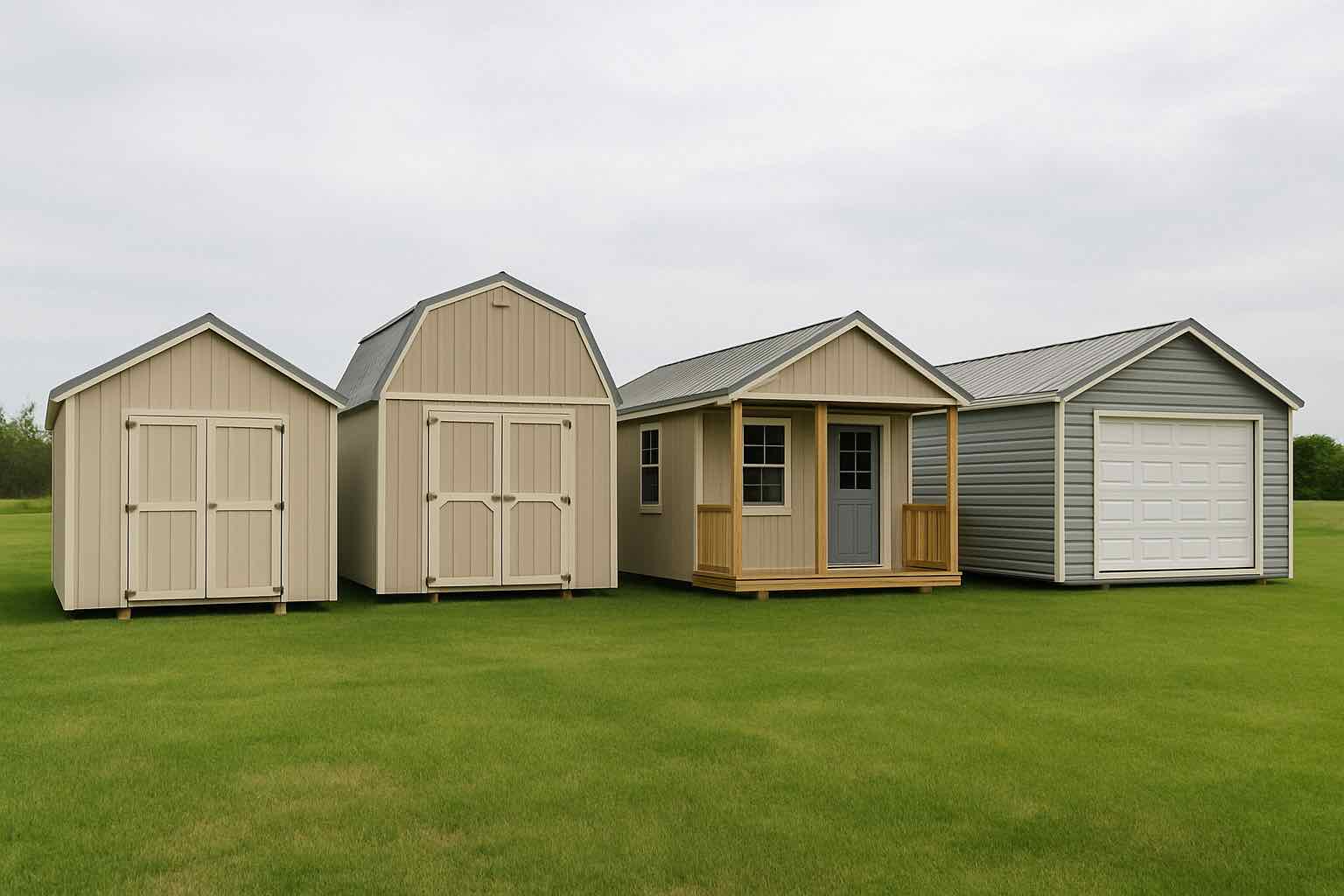
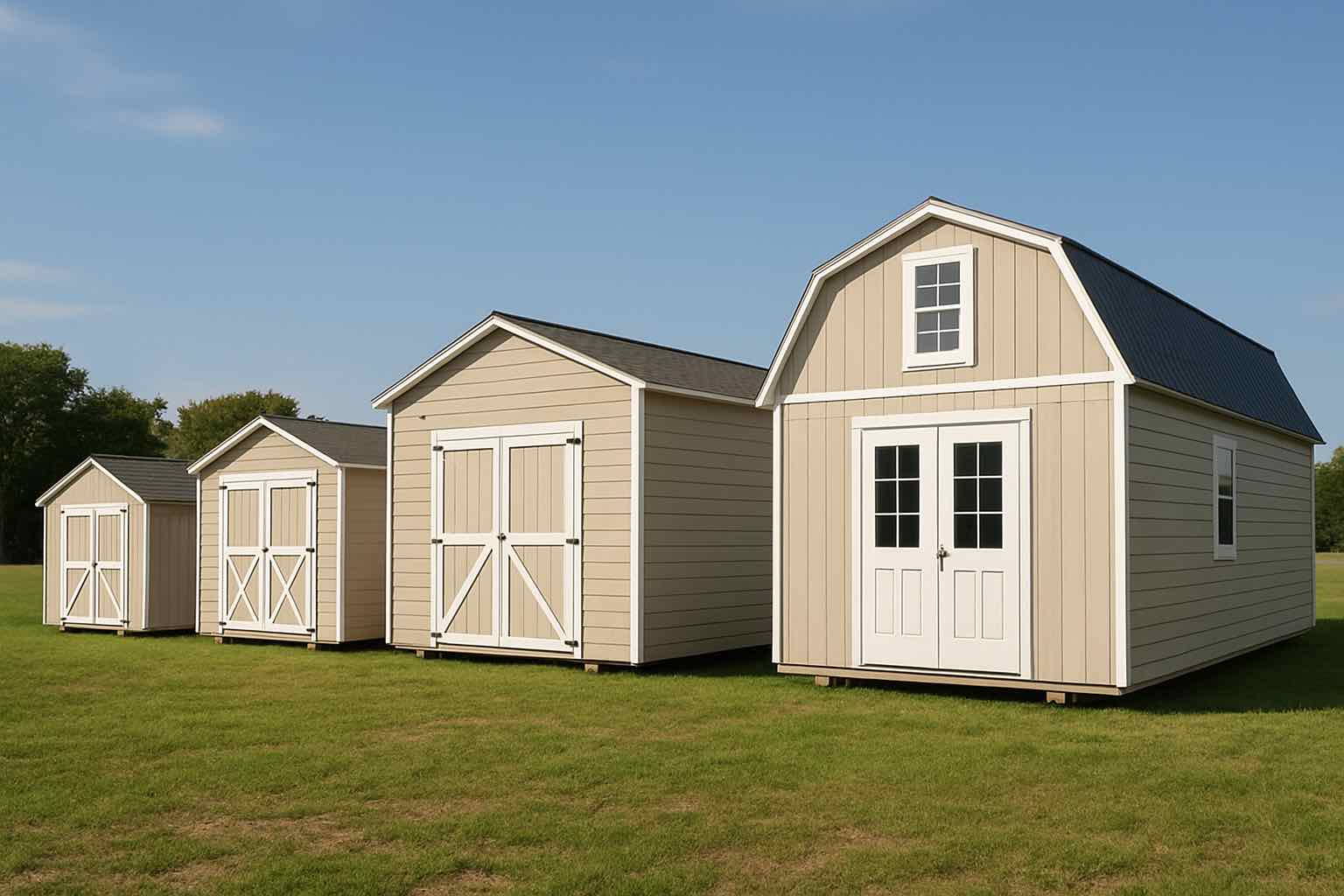
Rent-to-Own Shed Delivery and Site Prep: What to Know Before Your Building Arrives
Most rent-to-own shed dealers deliver free within a stated radius. Site prep, access clearance and permits are on you. Here is the pre-delivery checklist.
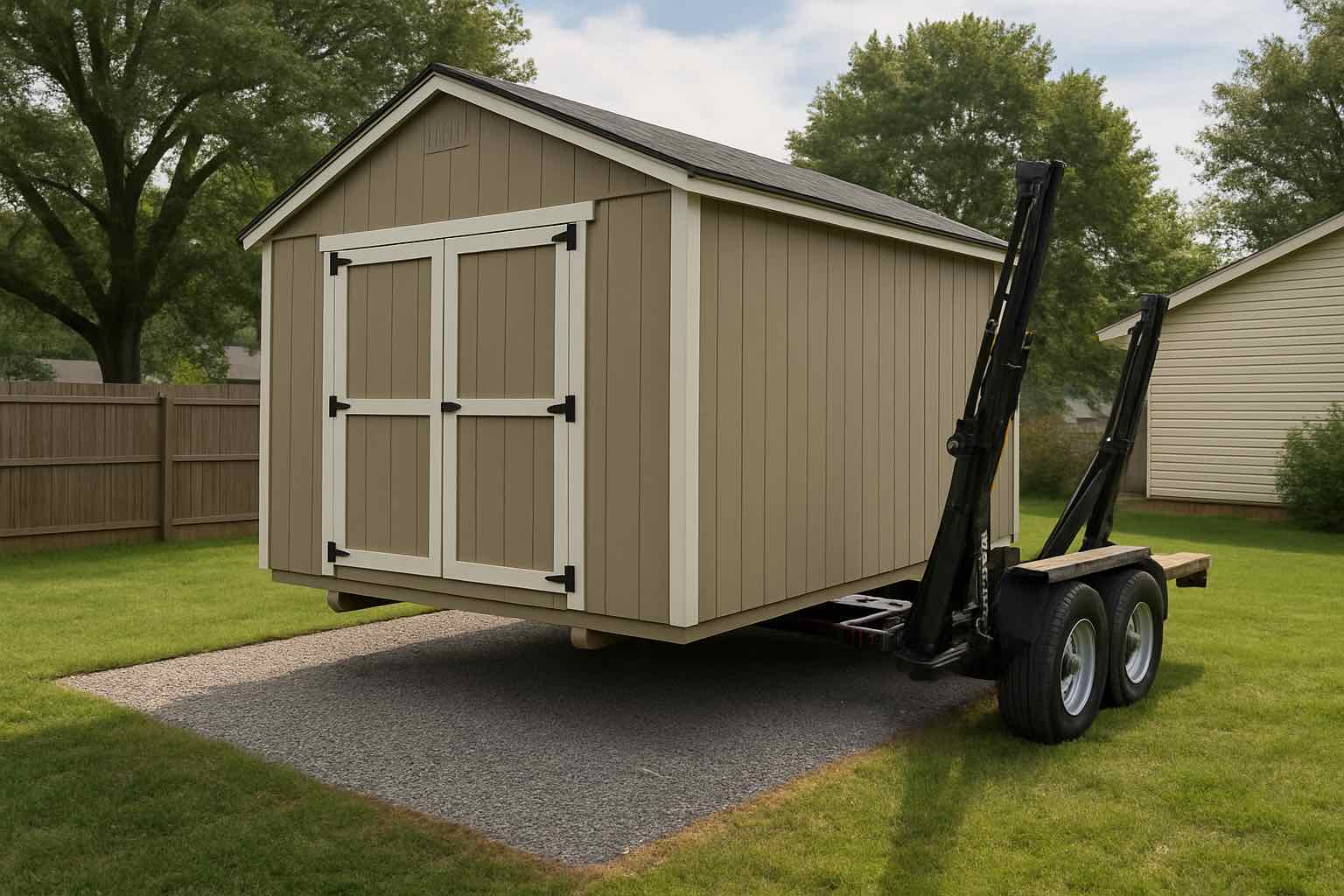
Photo from a rent-to-own shed dealer listed in the VRTO directory.
By VRTO (Virtual Rent To Own), the rent-to-own directory. Last updated: July 2026.
Yes, rent-to-own sheds come delivered, and at most dealers delivery is free within a published radius. The radii dealers advertise on their own sites typically run 30 to 100 miles: Mid Michigan Barns advertises delivery within 100 miles, Bayou Outdoors of Hammond within 50 miles, and Backyard Outfitters free delivery within 30 miles of one of its dealers, each per its own published policy as advertised in July 2026. The building arrives assembled on a trailer, and the driver places it. Some dealers fold setup into the price outright: McComb Factory Outlet Buildings in McComb, MS (see rent-to-own shed dealers in Mississippi) advertises its pavilion series "Starting at $3,795 Or Only 139/Mo Includes Delivery & Setup!" on its own site.
Here is the part the delivery page never leads with: the dealer delivers the building, but you own the site. Preparing the ground, clearing the access path, and checking permits and HOA rules are the customer's job at essentially every dealer, and all three need to be settled before you sign, not the night before the truck comes. A shed that cannot reach its pad is the most avoidable failure in this whole process.
VRTO is a rent-to-own directory, not a dealer. We do not sell sheds, we do not deliver them, and we take no cut of any lease. We track roughly 2,448 shed-dealer companies across the country alongside the 4,570+ rent-to-own stores in our core directory, which is why this guide can talk about delivery the way no single dealer's page will: as a set of questions to settle with whichever dealer you choose. You can find a rent-to-own shed dealer near you on VRTO.
How delivery actually works
Prefab rent-to-own sheds are built off-site and hauled to you finished. The driver arrives with a truck and trailer, and usually a powered shed mover (the industry calls it a mule) that can pivot the building through gates and around corners a trailer cannot manage. The driver backs in or mules the building to your spot, levels it on blocks or on the pad you prepared, and leaves. On a clear site with good access, placement is quick; on a blocked site it does not happen at all.
The delivery radius is a real, published number at most dealers, not a vague promise. The examples above (100 miles at Mid Michigan Barns, 50 at Bayou Outdoors, 30 at Backyard Outfitters) are each that dealer's own advertised policy, and they differ by more than three to one. That spread is the point: the radius, what counts as inside it, and what a mile beyond it costs are all dealer-specific. Get all three in writing before you sign, because delivery terms live in the dealer's policy, not in the payment agreement's standard language.
The pre-delivery checklist, in one table
One caveat before the table: delivery policies are each dealer's own, and they vary. Treat every row as a question to confirm with your dealer in writing, not a guarantee.
| What to settle | Whose job | When | What it involves |
|---|---|---|---|
| Site and pad | You | Before delivery day · ideally before signing | Level ground, gravel pad, or slab · cleared of debris and low branches |
| Access path | You | Before ordering the size | Measure every gate, fence run and turn against the building's width plus working clearance |
| Permit check | You | Before signing | One call to the county or city permit office with the size and placement |
| HOA sign-off | You | Before signing | Written approval where covenants govern outbuildings |
| Overhead wires and obstacles | You flag · driver judges | Before delivery day | Note power lines, septic fields, sprinkler heads along the path |
| Placement and leveling | Dealer's driver | Delivery day | Truck, trailer and mule move · building set and leveled per the dealer's policy |
Site prep without the upsell
You have three realistic foundations: bare level ground, a gravel pad, and a concrete slab. Dealers and pad contractors have an obvious interest in selling you up that ladder, so here is the neutral version.
Level ground is the minimum. Portable buildings are set and leveled on blocks, and a spot that is already flat and firm can be enough for a small utility shed. The catch is drainage and settling: ground that holds water will move, and a building that goes out of level ages badly.
A gravel pad is the workhorse answer. It drains, it spreads the load, it keeps the floor off wet ground, and it is dramatically cheaper than concrete. If your site slopes, a graded gravel pad usually beats trying to level the building on stacked blocks.
A concrete slab is rarely required for a portable building and is the most expensive option. Where it earns its cost is garages and heavy workshop use. If a dealer requires a particular foundation before the driver will unload, that requirement will be in its delivery policy: ask for it in writing rather than guessing in either direction.
Whatever you choose, the pad needs to be ready before the truck arrives, sized a little larger than the building's footprint, and reachable. A perfect pad behind a nine-foot gate is not a perfect pad if the building is ten feet wide. Our shed size guide covers footprints and access widths in detail.
Permits and HOAs, honestly
We are not going to print a square-footage cutoff here, because there is no national one. Whether a shed needs a permit depends on your city or county, and the thresholds turn on size, height, placement relative to property lines, and sometimes whether the building gets electricity. The only number that matters is the one your local permit office gives you, so the move is one phone call: tell them the size of the building and where on the lot it will sit, and ask what applies. Do it before you sign, because a permit problem discovered after delivery is far harder to unwind once the building is on your land.
HOAs are the same conversation with a different office. If your neighborhood has covenants, assume outbuildings are addressed in them: style, color, placement and size restrictions are all common. Get the approval in writing. A dealer will deliver wherever you point them, so confirm your covenants separately before the building arrives.
Two honest notes on scope. First, this is a question set, not legal advice, and the rules are genuinely local. Second, permit rules are separate from the payment agreement you sign with the dealer; confirm the details of that agreement in your contract.
Delivery and your rent-to-own contract
A rent-to-own shed runs on a month-to-month program, the structure the major operators advertise themselves: RTO National, Heartland Capital Investments, Graceland, Cook Portable Warehouses and Old Hickory Buildings all describe no-credit-check programs with nominal 36, 48 or 60-month schedules, the option to return the building, and early payoff without penalty. Two consequences of that structure matter for delivery.
First, the programs are advertised so that ownership transfers after the last payment or an early payoff, not on delivery day. That is the honest math to sit with before the truck comes: Milledgeville Sheds and Trailers (shedsofmilledgeville.com) in Georgia, to take one dealer's own published example, advertises a 14x40 lofted barn cabin at $17,378.25 cash or $621.42 a month for 60 months with $750 down, which is roughly $37,285 in total payments if you run the full term, as advertised in July 2026. In that example the rent-to-own total runs well above the cash price; what dealers advertise for that premium is access without a credit check and the option to return the building. At the small end the same structure is much lighter: Bob's Buildings and More in Pacific, MO advertises an 8x12 metal shed at $2,150 cash or $79.63 a month on a 60-month term with a $100 deposit, as advertised in July 2026.
Second, until you finish paying, the building's location is part of the deal. If you want to move it to another property mid-contract, ask the dealer or finance company first and get the answer in writing. And on delivery day itself, walk the building, photograph its condition, and confirm in writing when your payment clock starts and what happens if the driver arrives and cannot place the building. Those terms are the dealer's or finance company's own, they vary, and delivery day is the wrong time to learn them.
One more thing is worth planning for once the building is on your land, because a shed is not like a car you can drive back to a lot. It is a large, heavy structure on your property, so returning it or relocating it is a logistics job the dealer coordinates. Get the return process, the payment schedule, and what happens if you fall behind spelled out in the agreement before you sign, and ask the dealer directly how each of those works on your contract.
Match the prep to your site
If you have a flat backyard and a wide gate, your prep may be an afternoon of clearing and a string level. Confirm the gate width against the building width and you are most of the way there.
If your lot slopes, put the pad in first. A graded gravel pad turns a marginal site into an easy one, and leveling on a slope without one is where placements go wrong.
If your access is tight or urban, confirm mule clearance with the dealer before you order the size, not after. A narrow side yard can drive the size decision more than storage needs do; the building-type guide and the size guide can help you pick something that fits the path, not just the pad.
If you are on rural acreage, mark the spot and the route to it. Long grass hides stumps, soft ground and septic lines; the driver knows the trailer, you know the land.
How to verify it yourself
- Measure the gate and every pinch point on the path, not just the pad, against the building's width plus working clearance.
- Call the county or city permit office with the building size and placement before you sign.
- Get the delivery radius, the beyond-radius charge, and any failed-delivery or redelivery fee in writing.
- Photograph the site and the access path and send both to the dealer before delivery day.
- Confirm in writing who levels the building, what foundation the dealer requires, and when the first payment is due relative to delivery.
- If an HOA governs your lot, get its written approval before signing anything.
FAQ
Do rent-to-own sheds come delivered? Yes. The building is built off-site and delivered finished; the driver places and levels it. Delivery is the standard fulfillment model for prefab rent-to-own buildings, not an add-on service.
Is delivery free? Usually, within the dealer's published radius. Advertised examples run from 30 miles (Backyard Outfitters, of a dealer) to 100 miles (Mid Michigan Barns), per those dealers' own sites as advertised in July 2026. Beyond the radius, expect a charge; ask what it is per mile and get it in writing.
Do I need a permit for a shed? It depends entirely on your city or county. Thresholds vary by size, height and placement, so make one call to the local permit office with your specific building and spot before you sign. There is no national cutoff.
Do I need a concrete pad? Rarely. Most portable buildings sit on leveled blocks or a gravel pad; gravel is the usual best-value foundation because it drains and spreads the load. Confirm your dealer's specific foundation requirements in writing.
Can they deliver to my backyard? If the building fits through the path. Drivers use a powered shed mover to work through gates and turns, but no equipment fixes an opening narrower than the building. Measure first, order second.
When does the first payment start? The schedule is set in your contract and practices vary by dealer and finance company. Ask whether the clock starts at signing or at delivery, and get the answer in writing before you sign.
Can I move the shed later? Ask the dealer or finance company first; many programs ask you to get approval before relocating a building you are still paying on. Once the program is paid off, dealers advertise the building as yours to move.
Sources: delivery radii and setup terms are each named dealer's own published policy. The point about recovering a delivered building is a general, practical observation, not legal advice, and self-help rules vary by state; confirm anything specific with the dealer and your state. Every price is an individual dealer's own publicly advertised figure as of July 2026, with the dealer named and linked in the text above. Prices are examples, not quotes or averages, and change often; confirm current terms with the dealer.
About this guide. VRTO (Virtual Rent To Own) is a rent-to-own store directory. We are not a lender, dealer, retailer, attorney, or financial advisor, and we take no part in any lease. This guide is general information to help you shop and compare, not legal, financial, or tax advice. Rent-to-own programs, fees, credit-reporting practices, and consumer protections vary by company and by state and change over time. Always read your own agreement and confirm the current terms and your rights with the store and, where it matters, a qualified professional in your state before you sign.
Plus updates if the rules change. Never shared with stores. Unsubscribe anytime.
See the totals for your item
Compare weekly price, full total, and early payoff across rent-to-own stores near you.